
Been wondering, why am I so unmotivated? You’re not alone. Many people find themselves struggling to get out of bed, put off important tasks, or lose interest in things they once enjoyed. It’s easy to assume you’re being lazy or lacking discipline, but there’s a deeper reason behind your lack of motivation.
At North Woods Christian Counseling, for decades, we’ve worked with individuals from all walks of life who have felt unmotivated and unsure why they no longer have the drive they once did. Through years of experience helping people navigate anxiety, stress, trauma, addiction, and life transitions, we’ve seen that low motivation is a symptom rather than the root problem. When we take the time to understand what’s really going on, lasting change becomes possible.
We’ll explore the science behind motivation, the 12 most common reasons you may be feeling unmotivated, and practical steps you can take to start moving forward again. We’ll also discuss when a lack of motivation may be a sign that it’s time to seek professional support.
The Science Behind Why You Feel So Unmotivated
Many people believe motivation is something you either have or you don’t. It’s not. Motivation is influenced by a combination of brain chemistry, physical health, emotions, life experiences, habits, and even our sense of purpose. When one or more of these areas is out of balance, it’s completely normal to find yourself unmotivated.
One of the key players is dopamine, a neurotransmitter that helps drive motivation, learning, and goal-directed behavior. Contrary to popular belief, dopamine isn’t simply the “feel-good” chemical. It’s what encourages us to take action by making future rewards feel worthwhile. When dopamine levels or the brain’s response to dopamine are affected by chronic stress, poor sleep, depression, substance use, and other factors, even simple tasks can begin to feel exhausting.
Stress also plays a major role. When we’re under constant pressure, our bodies produce higher levels of cortisol, often called the stress hormone. While cortisol is helpful in short bursts, ongoing stress can leave us feeling mentally drained, emotionally exhausted, and less motivated to tackle everyday responsibilities.
Our brain also relies on the prefrontal cortex, the area responsible for planning, decision-making, focus, and self-control. When we’re overwhelmed, sleep-deprived, or struggling emotionally, this part of the brain doesn’t function as efficiently. As a result, we may procrastinate, avoid responsibilities, or feel stuck, even when we genuinely want to make progress.
Motivation is also closely connected to our physical well-being. Regular exercise, quality sleep, balanced nutrition, and good overall health all help support healthy brain function. At the same time, motivation isn’t purely biological. As an experienced therapist, I’ve seen that our beliefs, relationships, values, and faith can also shape our desire to move forward. When we lose hope, feel disconnected from our purpose, or carry emotional wounds that haven’t healed, it’s common for motivation to suffer as well.
The encouraging news is that motivation can often return once the underlying cause is identified and addressed. Rather than blaming yourself, it’s worth asking what your mind, body, and spirit may be trying to tell you.
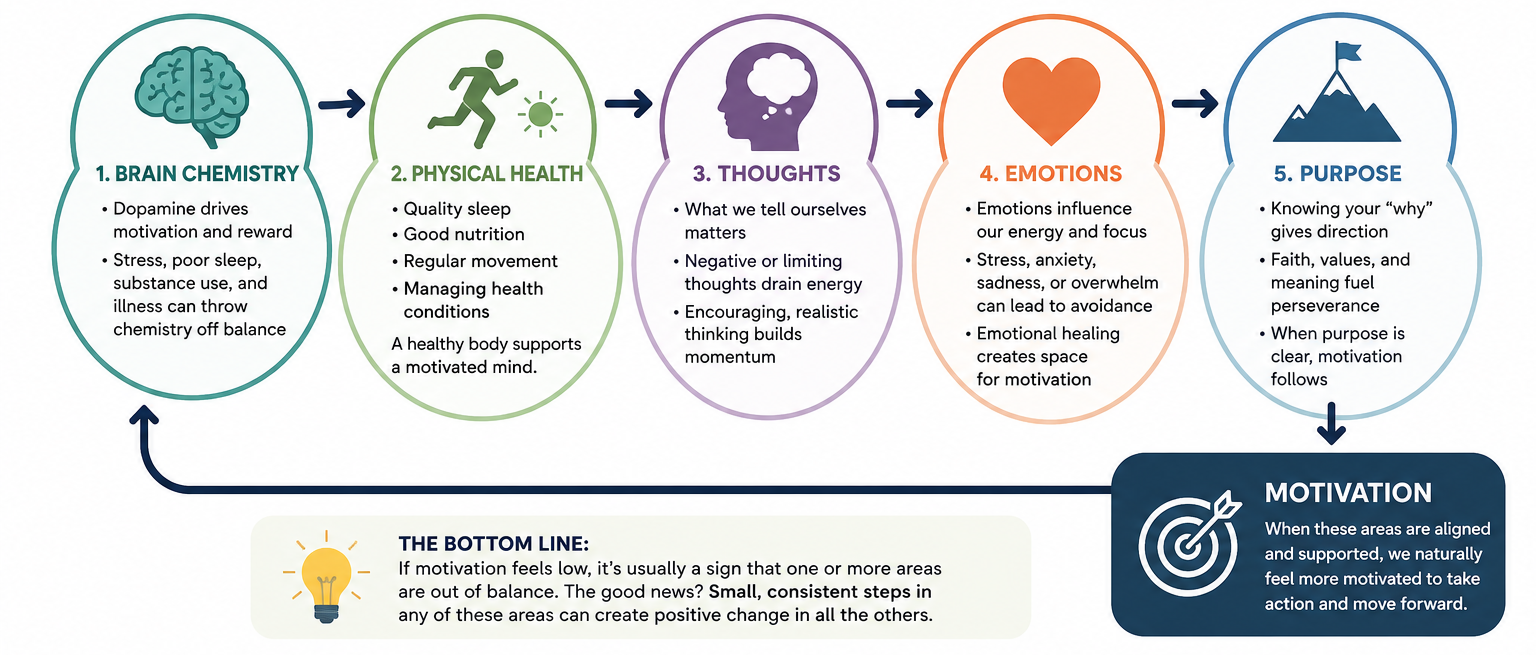
It’s important to remember that motivation doesn’t disappear for no reason. In my experience, there is always an underlying cause. Sometimes it’s physical. Sometimes it’s emotional. Other times, it’s a combination of several factors working together.
The good news is that once we identify what’s contributing to your lack of motivation, it becomes much easier to take meaningful steps forward.
1. Stress
Stress is one of the most common reasons people lose motivation. When you’re constantly juggling responsibilities, worrying about the future, or dealing with difficult situations, your brain shifts into survival mode. Instead of focusing on long-term goals, it prioritizes getting through the day.
Over time, even simple tasks can begin to feel overwhelming. You may find yourself procrastinating, struggling to concentrate, or lacking the energy to do things you normally enjoy. If stress has become a constant part of your life, addressing it can often lead to a noticeable improvement in motivation.
2. Burnout
Burnout goes beyond feeling tired after a busy week. It’s a state of emotional, physical, and mental exhaustion caused by prolonged stress. Many people continue pushing themselves long after their minds and bodies are asking for rest.
When you’re burned out, motivation often disappears because your internal resources have been depleted. You may feel detached from your work, lose interest in hobbies, or struggle to care about goals that once excited you. Recovery usually requires more than a weekend off. It often involves making lasting changes to your workload, boundaries, and daily habits.
3. Poor Sleep
Sleep plays a vital role in how your brain functions. When you consistently get poor-quality sleep or not enough of it, your ability to focus, regulate emotions, make decisions, and stay motivated all begin to suffer.
Even if you don’t feel exhausted, ongoing sleep deprivation can reduce your energy levels and make everyday responsibilities seem much harder than they really are. Improving your sleep routine is often one of the quickest ways to begin restoring motivation.
4. Lack of Exercise and Physical Activity
Regular physical activity doesn’t just benefit your body. It also supports healthy brain function and emotional well-being. Exercise helps release chemicals that improve mood, reduce stress, and increase energy levels.
If you’ve become sedentary, it’s common to feel sluggish and unmotivated. The encouraging news is that you don’t need an intense workout routine to experience benefits. Even a daily walk or a short session of gentle exercise can help boost your energy and make it easier to tackle everyday tasks.
5. Underlying Physical Health Conditions
Sometimes a lack of motivation has an underlying medical cause. Conditions such as thyroid disorders, iron deficiency, vitamin deficiencies, chronic pain, hormonal imbalances, sleep disorders, and certain medications can all contribute to fatigue and low motivation.
If your lack of motivation has appeared suddenly, persists despite healthy lifestyle changes, or is accompanied by other physical symptoms, it’s worth speaking with your doctor. Identifying and treating an underlying health condition can make a significant difference.
6. Anxiety and Depression
Anxiety and depression are among the most common mental health conditions associated with low motivation. Anxiety can leave you feeling overwhelmed and avoidant, while depression often causes a loss of interest in activities you once enjoyed.
Many people mistakenly believe they simply need more willpower, but these conditions affect how the brain processes motivation, reward, and energy. If feelings of sadness, worry, hopelessness, or emotional numbness have lasted for several weeks, seeking professional support can be an important first step toward recovery.
7. Alcohol and Drug Use
Alcohol and recreational drugs can temporarily change how you feel, but over time they often interfere with the brain’s natural reward system. They can affect dopamine levels, reduce sleep quality, increase anxiety, and leave you feeling physically and emotionally drained.
Even regular drinking that seems harmless can contribute to low energy and reduced motivation. Cutting back or seeking support for substance use can help restore both physical and mental wellbeing.
8. Lack of Goals or Direction
It’s difficult to stay motivated when you’re unsure where you’re heading. Without meaningful goals, everyday tasks can begin to feel repetitive or pointless.
We’ve found that many people regain motivation once they reconnect with what matters most to them. Setting clear, realistic goals that align with your values gives you something meaningful to work toward and makes it easier to maintain momentum.
9. Overwhelm and Decision Fatigue
When everything feels urgent, it can become difficult to know where to begin. The more decisions you have to make throughout the day, the more mentally exhausted you become.
Instead of taking action, many people freeze because they don’t know which task deserves their attention first. Breaking responsibilities into smaller, manageable steps can reduce overwhelm and help rebuild motivation one task at a time.
10. Perfectionism and Fear of Failure
Sometimes what looks like a lack of motivation is actually fear. If you believe everything has to be done perfectly, you may avoid starting altogether because you’re worried about making mistakes.
Perfectionism often leads to procrastination, self-criticism, and unrealistic expectations. Learning to focus on progress rather than perfection allows you to build confidence and regain motivation over time.
11. Unresolved Trauma
Traumatic experiences can have lasting effects on both the brain and nervous system. Even if the event happened years ago, unresolved trauma can continue to influence how you think, feel, and respond to everyday challenges.
Many people who have experienced trauma describe feeling emotionally numb, disconnected, or stuck. Addressing those experiences in a safe and supportive environment can help remove barriers that have been limiting motivation for years.
12. Loss of Hope or Faith
When life becomes difficult, it’s natural to question the future or even your faith. A loss of hope can make it difficult to see the purpose behind everyday responsibilities, leaving you feeling discouraged and unmotivated.
As a Christian counselor, I believe hope can be restored. While faith doesn’t remove life’s challenges, it can provide strength, meaning, and encouragement during difficult seasons. Reconnecting with God, alongside practical support and evidence-based counseling, can help religious people rediscover both purpose and motivation.
How to Find the Root Cause of Your Lack of Motivation

Before you can improve your motivation, it’s important to understand why you feel unmotivated in the first place. Rather than guessing, we recommend taking a step back and working through the following questions.
Step 1: Think About When It Started
Ask yourself:
- When did I first notice I was feeling unmotivated?
- Did it happen suddenly or gradually?
- Was there a stressful event or major life change around that time?
Sometimes the timing alone can provide valuable clues.
Step 2: Look at Your Physical Health
Next, consider whether your body could be contributing to the problem.
Ask yourself:
- Am I getting seven to nine hours of quality sleep?
- Have I been exercising regularly?
- Am I eating nutritious meals?
- Could an underlying medical condition be affecting my energy?
- Have I started any new medications?
If you’ve been experiencing fatigue, changes in appetite, or other physical symptoms, it may be worth scheduling a check-up with your doctor.
Step 3: Check in With Your Mental and Emotional Health
Take an honest look at how you’ve been feeling emotionally.
Ask yourself:
- Have I been feeling constantly stressed?
- Do I feel anxious or overwhelmed most days?
- Have I lost interest in things I normally enjoy?
- Do I feel emotionally exhausted or burned out?
If you answered “yes” to several of these questions, your lack of motivation may be connected to your mental health rather than a lack of willpower.
Step 4: Reflect on Your Lifestyle
Your daily habits have a significant impact on motivation.
Ask yourself:
- Am I drinking alcohol more often than usual?
- Am I using recreational drugs?
- Do I spend most of my day sitting?
- Am I constantly distracted by my phone or social media?
- Do I have healthy daily routines?
Small habits repeated every day can either support your motivation or gradually drain it.
Step 5: Consider Your Purpose
Finally, ask yourself whether you’ve lost sight of what you’re working toward.
- Do I have clear goals?
- Am I excited about the future?
- Do I feel like my life has purpose?
- Has my faith become distant during this season?
When we lose our sense of direction, it’s common for motivation to disappear as well.
Step 6: Look for Patterns
After working through these questions, don’t focus on finding just one cause. Many people discover their lack of motivation comes from several factors working together. For example, stress may be affecting your sleep, poor sleep may be increasing your anxiety, and anxiety may be making it harder to exercise or stay productive.
Understanding these patterns is often the first step toward lasting change.
If you’re still unsure why you feel unmotivated or are having a hard time changing by yourself, you don’t have to do it alone. At North Woods Christian Counseling, we help people identify the underlying causes of low motivation and create a practical plan to move forward with confidence, hope, and purpose.
When Is a Lack of Motivation a Sign of Something More Serious?

If your lack of motivation has lasted for several weeks or months, or it’s beginning to affect your work, relationships, health, or daily responsibilities, it may be a sign that something more serious is going on.
You should consider speaking with a healthcare professional or counselor if you:
- Feel unmotivated most days for two weeks or longer.
- Have lost interest in activities you once enjoyed.
- Feel constantly anxious, overwhelmed, or emotionally exhausted.
- Struggle to get out of bed or complete everyday tasks.
- Notice ongoing changes in your sleep or appetite.
- Find yourself relying on alcohol or drugs to cope.
- Feel hopeless about the future.
- Have experienced a traumatic event that you haven’t fully processed.
It’s also important to remember that low motivation can sometimes be a symptom of an underlying medical condition. If your symptoms appeared suddenly or are accompanied by persistent fatigue, unexplained weight changes, chronic pain, or other physical concerns, it’s a good idea to schedule an appointment with your doctor. They can rule out medical causes such as thyroid disorders, vitamin deficiencies, hormonal imbalances, or other health conditions that may be contributing to the problem.
How Counseling Can Help You Find Motivation Again
If you’ve tried getting more sleep, exercising, setting goals, or changing your routine but still find yourself asking struggling to find motivation, it may be time to look a little deeper. In many cases, low motivation isn’t the problem itself. It’s a symptom of something that’s been left unaddressed.
At North Woods Christian Counseling, we work alongside you to understand what’s really contributing to your lack of motivation. Whether it’s chronic stress, anxiety, depression, unresolved trauma, burnout, or a loss of hope, our goal is to help you identify the root cause and develop practical strategies that lead to lasting change.
Most importantly, counseling provides a safe, confidential space where you don’t have to carry everything on your own. Having someone listen, ask the right questions, and help you see patterns you couldn’t recognize yourself is exactly what’s needed to begin moving forward.
No matter how long you’ve been feeling stuck, change is possible. With the right support, you can overcome the obstacles holding you back and begin building a life filled with greater hope, purpose, and motivation.
Contact North Woods Christian Counseling For A Free Evaluation

We help people uncover the root causes of low motivation and develop practical, personalized strategies to move forward. Whether you’re struggling with stress, burnout, anxiety, depression, unresolved trauma, or simply feeling stuck in life, we’re here to walk alongside you with compassion, understanding, and evidence-based care.
We offer a free evaluation to help you better understand what you’re experiencing and determine the best path forward. It’s an opportunity to ask questions, discuss your concerns, and learn how counseling may help you regain your motivation, confidence, and sense of purpose.
You don’t have to wait until things get worse before reaching out. Contact North Woods Christian Counseling today to schedule your free evaluation and take the first step toward feeling like yourself again.
FAQs: Why Am I So Unmotivated
– Why do I feel so unmotivated all of a sudden?
A sudden lack of motivation can be triggered by many different factors, including increased stress, poor sleep, burnout, illness, anxiety, depression, major life changes, or even certain medications. If your motivation has changed unexpectedly and doesn’t improve after a couple of weeks, it’s worth taking a closer look at what may have changed in your life or speaking with a healthcare professional.
– Why am I so unmotivated to workout?
A lack of motivation to exercise is often linked to stress, fatigue, poor sleep, burnout, or simply trying to do too much too soon. Rather than relying on motivation alone, focus on building a consistent habit. Even a 10-minute walk is a great place to start and can help improve both your physical and mental wellbeing.
– Is it normal to feel unmotivated for weeks?
It’s normal to experience periods of low motivation, especially during stressful times. However, if you’ve been feeling unmotivated for several weeks and it’s affecting your work, relationships, or daily life, it could be a sign of an underlying physical or mental health concern. If your symptoms persist, consider speaking with a doctor or counselor.
– Can alcohol affect motivation?
Yes. While alcohol may help you relax in the short term, regular or excessive drinking can interfere with sleep, reduce energy levels, affect brain chemistry, and contribute to anxiety or depression. Over time, these effects can make it much harder to stay motivated.
– How do I stop feeling unmotivated?
The first step is identifying what’s causing your lack of motivation. Once you understand the root cause, you can begin making meaningful changes. Improving your sleep, exercising regularly, managing stress, setting realistic goals, reconnecting with supportive people, and seeking professional help when needed can all make a significant difference.
– How do I know if I should seek professional help?
If your lack of motivation has lasted for more than a few weeks, is affecting your daily life, or is accompanied by persistent sadness, anxiety, hopelessness, or changes in sleep or appetite, it’s a good idea to seek professional support. A trained counselor can help identify the underlying cause and work with you to develop practical strategies for moving forward.
